
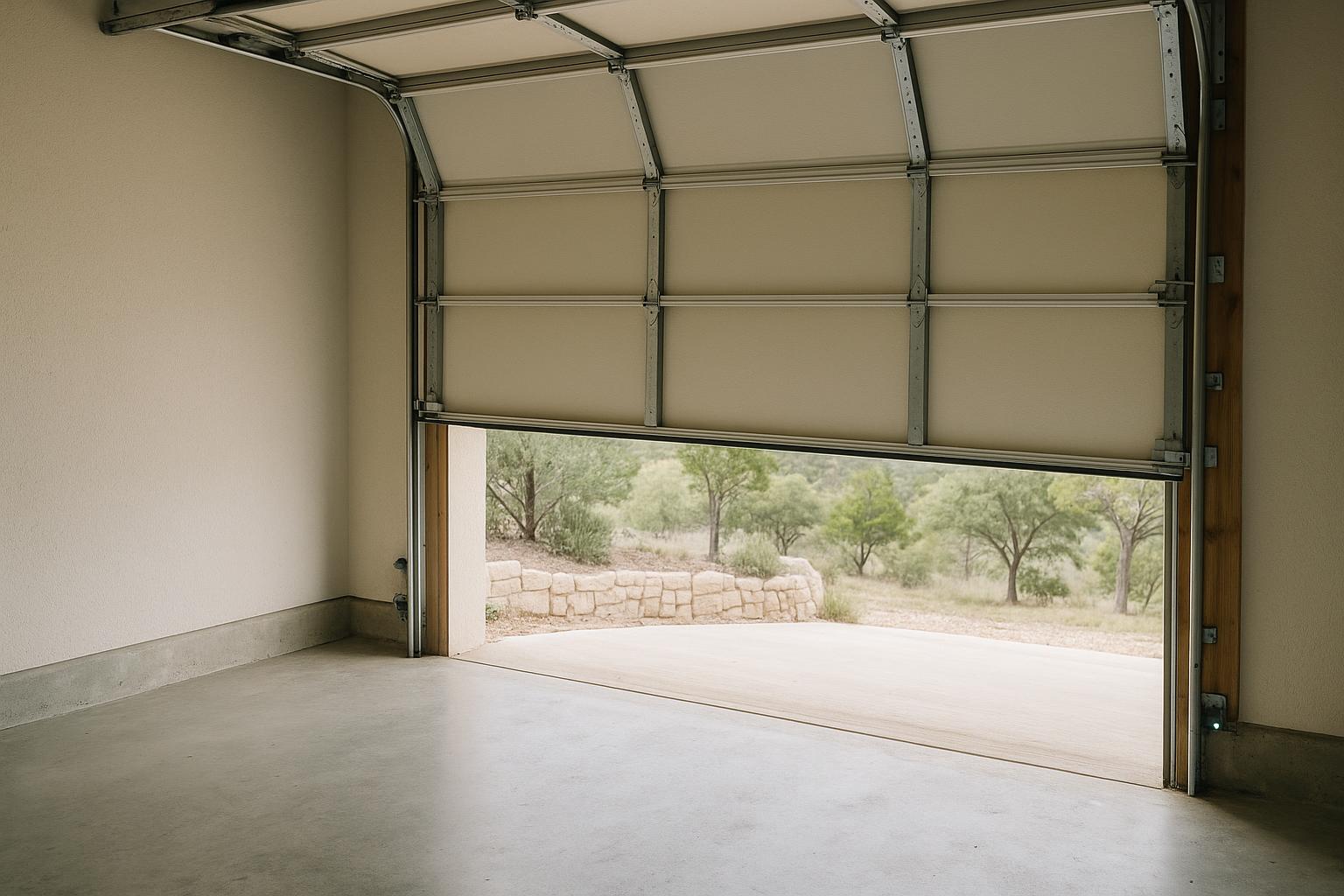
That Frustrating Moment When Your Garage Door Won't Stay Closed
You press the button on your remote, watch the garage door glide downward, and then — just before it reaches the floor — it stops and reverses right back up. You try again. Same thing. Maybe you try holding the wall button. Still reverses. It's one of the most common garage door problems homeowners in Lakeway deal with, and it can be incredibly frustrating, especially when you're trying to leave for work or secure your home before a storm rolls through the Hill Country.
The good news is that this issue usually has a straightforward explanation. The bad news is that ignoring it can lead to bigger problems down the road. Let's walk through the most common reasons your garage door reverses before hitting the floor and what you can do about each one.
1. Misaligned or Dirty Safety Sensors
This is the number one cause of a garage door that reverses before closing completely. Every garage door opener manufactured after 1993 is required by federal law to have photo-eye safety sensors mounted near the bottom of the door tracks, about six inches off the ground. These sensors send an invisible beam across the opening. If anything breaks that beam — a bike, a trash can, a leaf, or even a spiderweb — the door interprets it as an obstruction and reverses to prevent injury.
Here's what to check:
- Alignment: Look at the small LED lights on each sensor. If one is blinking or off, the sensors may have been bumped out of alignment. Gently adjust them until both lights are solid.
- Cleanliness: Wipe the sensor lenses with a soft cloth. Dust, dirt, and cobwebs accumulate quickly in Lakeway garages, especially during pollen season.
- Wiring: Inspect the thin wires running from each sensor back to the opener. If they're frayed, pinched, or disconnected, the system won't function properly.
If cleaning and realigning the sensors doesn't solve the problem, the sensors themselves may need to be replaced.
2. Incorrect Close-Limit Settings
Your garage door opener has close-limit settings that tell the motor exactly how far the door should travel before it's considered fully closed. If these settings are off — even by a small amount — the opener may think the door has hit an obstruction when it's actually just reaching the floor. The motor interprets the resistance as a safety issue and reverses the door.
On most openers, the close-limit adjustment is a small screw or dial on the back or side of the motor unit. Turning it slightly can extend the travel distance. However, adjusting this incorrectly can cause the door to press too hard against the floor, which creates its own set of problems. If you're not confident making this adjustment, it's worth having a professional take a look.
3. Worn or Broken Springs
Garage door springs do the heavy lifting — literally. They counterbalance the weight of the door so the opener doesn't have to work as hard. When springs wear out or break, the door becomes significantly heavier. The opener motor strains against the extra weight, and the built-in force sensor may trigger a reversal because it detects too much resistance.
Signs that your springs may be the culprit include:
- The door feels unusually heavy when you try to lift it manually
- You hear loud creaking or grinding when the door moves
- The door opens unevenly or appears crooked
- You notice a visible gap in one of the torsion springs above the door
Important safety note: Garage door springs are under extreme tension and can cause serious injury if handled improperly. Spring replacement should always be performed by a trained technician. Homeowners in the Lakeway and Bee Cave area can call us for same-day spring replacement service.
4. Obstructions in the Track
Sometimes the answer is simpler than you'd expect. Small rocks, leaves, screws, or other debris can get lodged in the garage door tracks and prevent the door from closing all the way. The opener senses the resistance and reverses. Take a close look at both tracks from top to bottom and remove anything that shouldn't be there.
While you're inspecting, check for dents or bends in the tracks themselves. Even a minor dent can cause enough friction to trigger the safety reversal. Bent tracks usually need professional attention to repair or replace without causing further damage to the door.
5. Worn Rollers or Hinges
Over time, the rollers that guide your garage door along the tracks can wear down, crack, or seize up. When rollers don't spin freely, the door doesn't move smoothly, and the opener has to work harder. That extra strain can trick the force settings into thinking there's an obstruction.
Nylon rollers typically last longer than steel rollers and operate much more quietly — something your neighbors in Steiner Ranch or Hudson Bend will appreciate if you're opening and closing the garage early in the morning. Replacing worn rollers is a relatively quick fix that can make a noticeable difference in how your door operates.
6. The Opener Force Settings Need Adjustment
In addition to limit settings, most garage door openers have force settings that control how much power the motor uses to open and close the door. If the downward force is set too low, the opener may not have enough power to push the door all the way to the floor and will reverse prematurely.
You can typically adjust the force using a small dial or screw on the opener unit. Increase the close force gradually and test the door after each adjustment. Be careful not to set it too high — the door should still reverse when it encounters a real obstruction. Place a 2x4 flat on the ground under the door and close it. If the door doesn't reverse when it contacts the board, the force is set too high and poses a safety risk.
7. Weather-Related Issues
Living in Lakeway means dealing with Texas heat, which can cause metal tracks and components to expand. In the summer months, thermal expansion can subtly change the alignment of your tracks and the fit of your door. Cold snaps can have the opposite effect, causing components to contract. These seasonal shifts can throw off the delicate balance of your garage door system and contribute to reversal issues.
Routine preventive maintenance — including lubrication, alignment checks, and hardware tightening — can help your garage door handle temperature swings without skipping a beat.
When to Call a Professional
Some of these fixes are simple enough for a handy homeowner to tackle. Cleaning sensors, removing debris from tracks, and making minor adjustments are all reasonable DIY tasks. But if you've worked through this list and your door is still reversing, or if the problem involves springs, cables, or track damage, it's time to call in a professional.
At Lakeway Garage Door Specialists, we diagnose and repair reversal issues every week for homeowners across Lakeway, Bee Cave, Spicewood, and West Lake Hills. We'll identify the root cause, explain your options, and get your door working reliably again — usually in a single visit.
Don't let a reversing garage door compromise your home's security or your daily routine. Contact us today to schedule a service call and get the problem resolved quickly.