
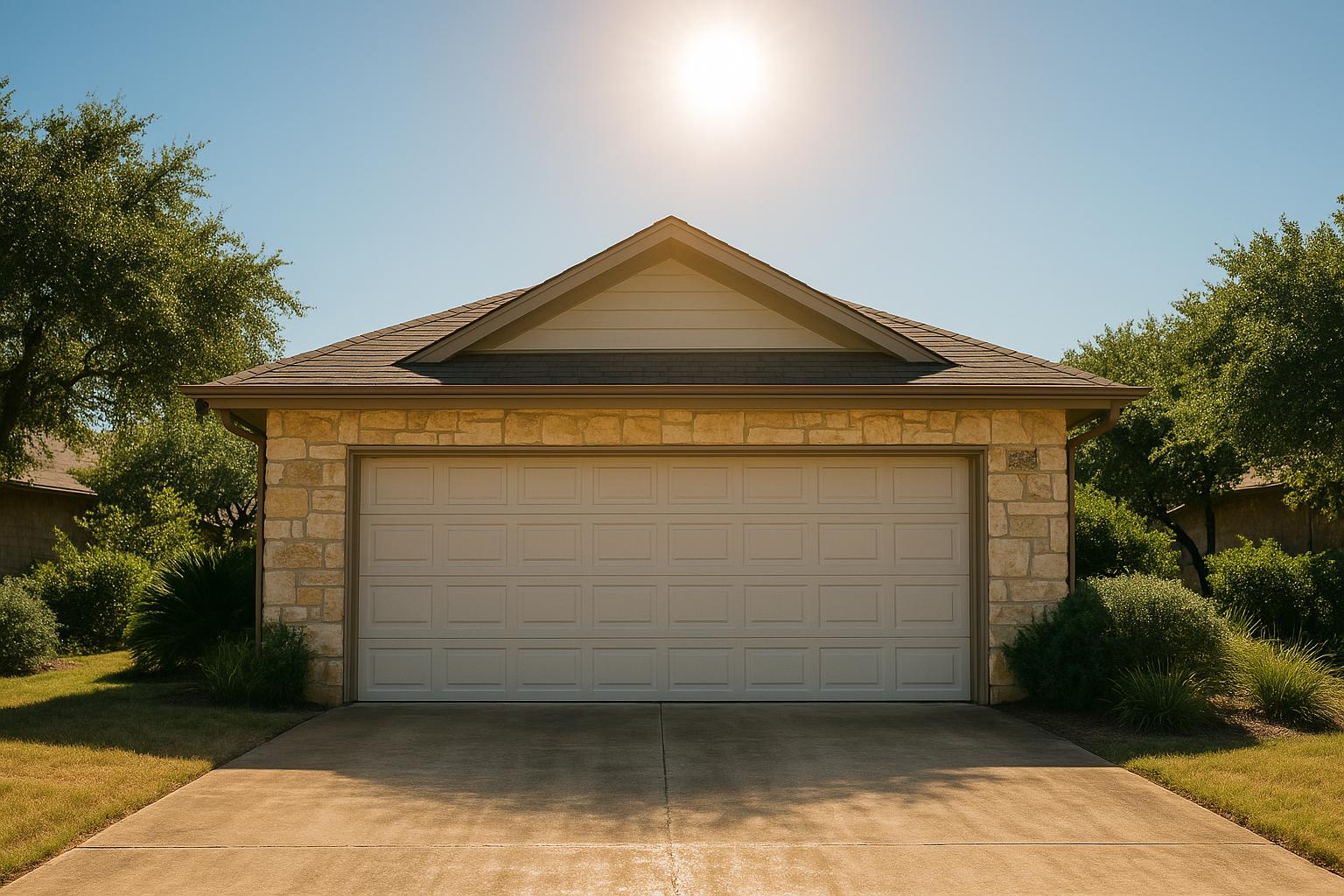
When the Temperature Rises, Your Garage Door Can Suffer
If you've lived in Lakeway for even one summer, you know the heat is no joke. Temperatures regularly climb past 100°F, and that brutal Texas sun doesn't just affect you — it affects your garage door system too. Every summer, we get calls from homeowners across Lakeway, Bee Cave, and Steiner Ranch who are suddenly dealing with a garage door that won't open, moves sluggishly, or stops working altogether.
The good news is that most heat-related garage door problems are preventable. The key is understanding what's happening and knowing when to take action before a minor issue turns into a major repair.
How Extreme Heat Affects Your Garage Door
Your garage door is the largest moving part of your home, and it's made up of multiple components that all react to temperature changes. Here's what happens when the mercury climbs.
Metal Expansion in Tracks and Hardware
Metal expands when it heats up. Your garage door tracks, springs, hinges, and rollers are all made of metal, and when they expand unevenly, things can start to bind. You might notice your door moving more slowly than usual, jerking as it travels along the tracks, or getting stuck partway up or down.
In most cases, this isn't a sign that something is broken — it's a sign that your system needs proper lubrication and alignment to handle the thermal stress.
Garage Door Opener Overheating
Your garage door opener has a motor, and motors generate heat. When the ambient temperature inside your garage is already well above 100°F, that motor has to work even harder. Many modern openers have a built-in thermal protection system that will shut the unit down temporarily if it overheats. If your garage door opener suddenly stops responding and then starts working again after 15 to 20 minutes, overheating is likely the cause.
Weatherstripping and Seal Deterioration
The rubber weatherstripping along the bottom and sides of your garage door takes a beating in the Texas sun. Over time, UV exposure and extreme heat cause it to crack, warp, and lose its flexibility. When the bottom seal warps, it can actually create drag against the garage floor, making the door harder to open and putting extra strain on your opener and springs.
Photo-Eye Sensor Issues
The safety sensors at the bottom of your garage door opening can be affected by direct sunlight. When the sun hits one of the photo-eye sensors at just the right angle, it can overwhelm the infrared beam and trick the system into thinking there's an obstruction. This often causes the door to refuse to close or to reverse immediately after you press the button.
How to Prevent Heat-Related Garage Door Problems
Most of these issues can be avoided with a little proactive care. Here's what we recommend for homeowners in the Lakeway area.
Keep Your Tracks and Hardware Lubricated
Apply a silicone-based garage door lubricant to your tracks, rollers, hinges, and springs at least twice a year — ideally before summer hits and again in the fall. This helps metal components move smoothly even when they expand in the heat. Avoid using WD-40 as a lubricant, as it's actually a solvent and can attract dust and grime over time.
Ventilate Your Garage
A garage with no airflow becomes an oven. If your garage regularly exceeds 110°F or more in the summer, consider adding ventilation. A simple exhaust fan, a vent in the garage door itself, or even keeping an interior door cracked during the hottest part of the day can help lower the temperature enough to protect your opener motor.
Shade or Adjust Your Photo-Eye Sensors
If your garage door refuses to close during certain times of the day, check whether sunlight is hitting your safety sensors directly. You can create a small shade around each sensor using a piece of cardboard or a short length of PVC pipe. Just make sure you don't block the sensor's line of sight to the other unit.
Replace Worn Weatherstripping Before Summer
Take a look at the rubber seal along the bottom of your garage door. If it's cracked, brittle, or pulling away from the door, replace it before the heat makes things worse. A fresh bottom seal keeps out heat, dust, insects, and water — and it reduces the friction that can strain your opener.
Schedule a Pre-Summer Tune-Up
The single best thing you can do to avoid heat-related breakdowns is to have your garage door professionally serviced before summer arrives. A proper tune-up includes lubricating all moving parts, checking spring tension, inspecting the opener, tightening hardware, testing the safety features, and making sure everything is aligned and balanced. Think of it like getting your car's AC checked before a road trip — a little prevention goes a long way.
When to Call a Professional
Some heat-related garage door issues are easy to handle on your own, but others require a trained technician. Call a professional if you notice any of the following:
- Your garage door is visibly off-track or crooked
- The opener motor runs but the door doesn't move
- You hear grinding or scraping sounds that lubrication doesn't fix
- The door feels significantly heavier than usual when lifted manually
- Springs appear stretched, rusty, or damaged
Attempting to adjust springs or repair track alignment on your own can be dangerous. Garage door springs are under extreme tension and can cause serious injury if handled improperly.
Living With the Lakeway Heat — Without the Headaches
Your garage door works hard year-round, but summer puts it through its toughest test. The combination of extreme temperatures, direct sun exposure, and increased use during vacation season means more wear on every component of the system.
At Lakeway Garage Door Specialists, we help homeowners across Lakeway, West Lake Hills, Hudson Bend, and Spicewood keep their garage doors running reliably through even the hottest months. Whether you need a quick tune-up, a weatherstripping replacement, or an emergency repair when your door won't budge, we show up on time and get it done right.
Don't wait until you're stuck in a 115-degree garage with a door that won't open. A little maintenance now saves you time, money, and a whole lot of frustration later. Give us a call or schedule a service appointment today — your garage door will thank you.