
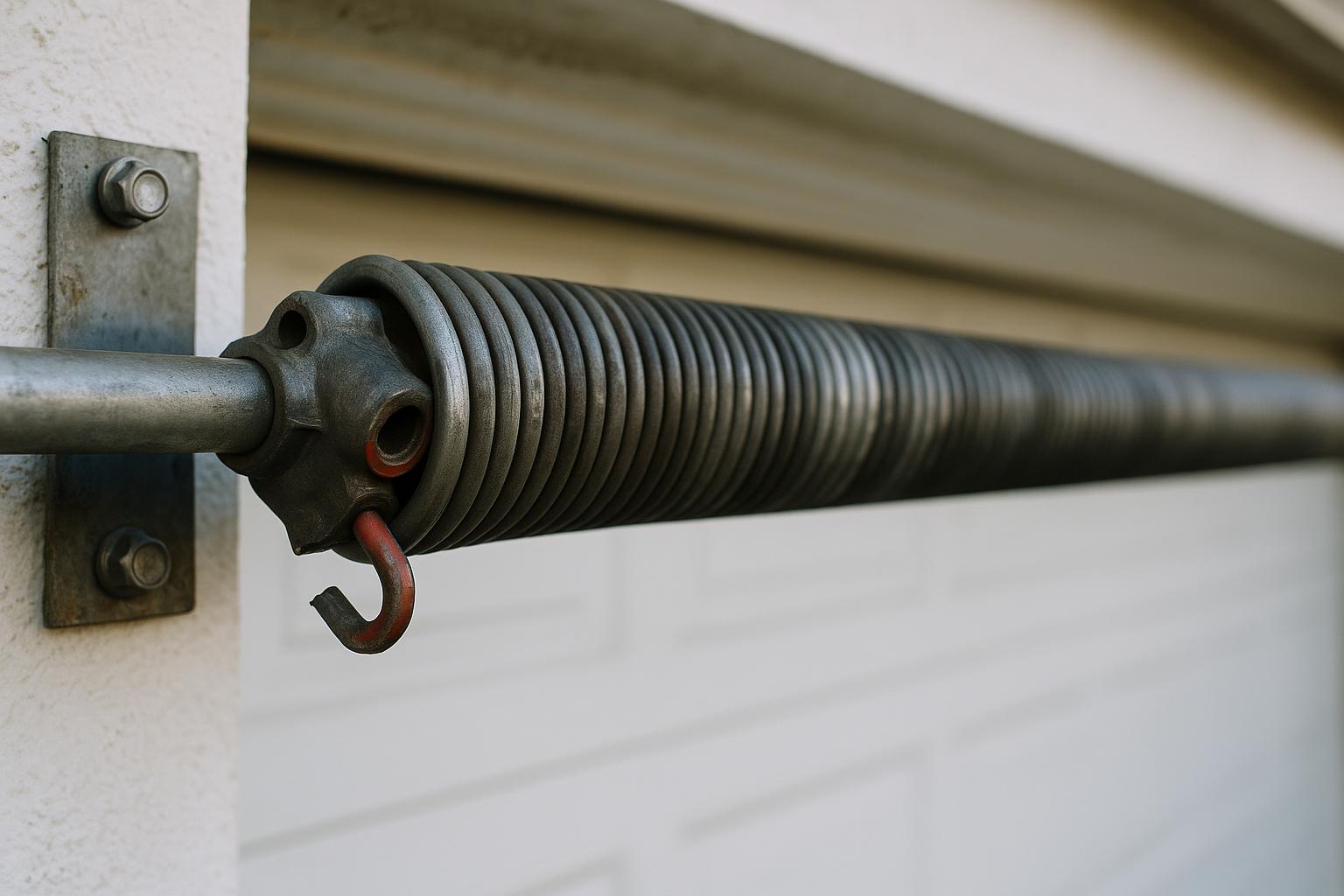
Your Garage Door Springs Are Trying to Tell You Something
If you've ever heard a garage door spring break, you know the sound — a loud, startling bang that echoes through the house like a gunshot. It's alarming, and it usually happens at the worst possible time: when you're running late for work, loading groceries, or trying to get the kids to school.
The good news is that garage door springs rarely fail without warning. There are almost always signs that they're wearing out, and catching those signs early can save you from getting stranded with a door that won't open. For homeowners in Lakeway and the surrounding Hill Country communities, understanding these warning signs can mean the difference between a planned repair and an emergency call.
What Do Garage Door Springs Actually Do?
Before we talk about what goes wrong, it helps to understand what springs do in the first place. Your garage door is heavy — most residential doors weigh between 130 and 350 pounds. The springs carry the vast majority of that weight, making it possible for your opener (or your arms) to lift the door with relatively little effort.
There are two main types of garage door springs:
- Torsion springs — mounted on a metal shaft above the door opening. These are the most common type in modern homes across Lakeway and Bee Cave.
- Extension springs — mounted along the horizontal tracks on either side of the door. These are more common in older installations.
Both types are under extreme tension, and both have a limited lifespan. Most standard torsion springs are rated for approximately 10,000 cycles — one cycle being a single open-and-close. If your household opens and closes the garage door four times a day, that's roughly seven years of life.
7 Warning Signs Your Springs Are Wearing Out
1. The Door Feels Heavier Than Usual
Try this simple test: disconnect your garage door opener by pulling the red emergency release handle, then manually lift the door. A properly balanced door with healthy springs should feel light — almost weightless — and stay open about three to four feet off the ground on its own. If the door feels noticeably heavy or slams back down when you let go, your springs are losing tension.
2. The Door Opens Unevenly or Crooked
If one side of your garage door rises faster than the other, it could mean one spring has weakened more than its counterpart. This is especially common in two-spring systems where the springs were installed at the same time but have worn at different rates. A crooked door puts stress on your tracks, rollers, and opener, so this isn't something to ignore.
3. You Hear Squeaking, Grinding, or Popping Sounds
Some noise during operation is normal, but new or worsening sounds are worth paying attention to. Worn springs can produce squealing or creaking noises as the coils struggle under load. A loud pop or snap during operation could indicate a coil has already separated.
4. There's a Visible Gap in the Spring Coils
Take a look at your torsion springs above the door. When a spring is intact, the coils are tightly wound together with no visible gaps. If you see a space or separation between coils — even a small one — the spring has either broken or is on the verge of breaking.
5. Your Opener Is Struggling
When springs weaken, your garage door opener has to work harder to compensate. You might notice the motor straining, the door opening more slowly, or the opener stopping partway through the cycle. Over time, this extra load can burn out your opener motor entirely — turning a spring replacement into a much more expensive repair.
6. The Door Won't Stay Open
A garage door that slowly drifts closed on its own — or won't stay in the halfway position — is a classic sign of spring fatigue. The springs no longer have enough force to counterbalance the door's weight. This is also a safety concern, especially if you have children or pets who might be near the door.
7. You Can See Rust or Corrosion on the Springs
Humidity and temperature swings here in the Texas Hill Country can take a toll on metal components. Rust increases friction between the coils and weakens the metal, accelerating wear. If your springs look corroded, their remaining lifespan is likely shorter than you'd expect.
What to Do If You Notice These Signs
First and most importantly: do not attempt to replace garage door springs yourself. This is one of the few home repairs where the DIY approach can be genuinely dangerous. Torsion springs are under hundreds of pounds of tension, and an improper release can cause serious injury or worse. Every year, emergency rooms across the country treat injuries from homeowners who tried to tackle this job without the proper tools and training.
Instead, call a qualified garage door technician to inspect the springs and assess the situation. In many cases, if one spring has failed or is close to failing, we recommend replacing both springs at the same time. Since they've endured the same number of cycles, the second spring is usually not far behind.
Can You Extend the Life of Your Springs?
You can't make springs last forever, but you can help them reach their full lifespan with a few simple practices:
- Lubricate the springs two to three times a year with a silicone-based garage door lubricant. This reduces friction and helps prevent rust.
- Keep the door balanced. If you notice the door pulling to one side or feeling heavy, get it inspected sooner rather than later. An unbalanced door wears springs out faster.
- Reduce unnecessary cycles. Every open-and-close counts toward the spring's rated lifespan. If you're using the garage door as your primary entrance multiple times a day, consider upgrading to high-cycle springs rated for 25,000 or even 50,000 cycles.
- Schedule annual maintenance. A professional tune-up includes spring inspection, balance testing, lubrication, and hardware tightening — all of which help catch problems early.
Why Lakeway Homeowners Choose Us for Spring Replacement
At Lakeway Garage Door Specialists, spring replacement is one of the most common calls we handle — and we've seen just about every scenario. Whether you're in Steiner Ranch, Hudson Bend, Spicewood, or West Lake Hills, we respond quickly because we know a broken spring means your car is stuck and your day is disrupted.
We stock the most common spring sizes on our trucks so most repairs can be completed in a single visit. We also test and rebalance the entire door system after every spring replacement to make sure everything is operating safely and smoothly.
If your garage door is showing any of the warning signs above, don't wait for the loud bang. Give us a call and let us take a look before a worn spring becomes a broken one — and a much bigger headache.